

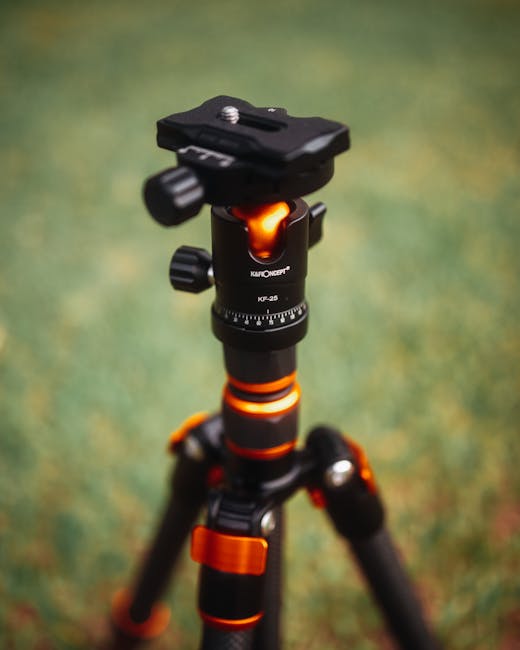
Here’s the annoying truth I learned the hard way: a great tripod can still ruin your sharpness if the head is wrong. I used to blame my camera, my lens, even my shutter speed—then I swapped tripod heads and the problem vanished.
In 2026, most photographers don’t need “the best” tripod head. They need the right one for the job: crisp landscapes on a still scene, or smooth panning/tilting for moving subjects. This guide will help you pick the right type—ball head, pan-tilt head, or gimbal—and avoid the mistakes that cost you sharpness (and time).
Tripod head choice affects sharpness more than you think
A tripod head is the part that locks your camera’s position and helps you move it. It also controls tiny shifts. Those tiny shifts matter when you’re shooting landscapes at f/8–f/16 or birds with long lenses.
Sharp landscapes rely on stability. Moving subjects rely on smooth motion and correct balance. When the head fights you—slipping, twisting, or lagging—your images soften even if your settings are “correct.”
Ball head vs pan-tilt vs gimbal: the quick decision
If you want one simple rule: ball heads are fast and compact, pan-tilt heads are precise and controlled, and gimbals are for heavy long-lens wildlife work.
Here’s the plain-English breakdown of what each tripod head type is best at. (I’ll still show you how to choose based on your real camera gear.)
| Head type | Best for | Strength | Common downside |
|---|---|---|---|
| Ball head | Landscapes, travel, quick compositions | Fast locking, fewer parts | Some models can “creep” with heavy setups |
| Pan-tilt head | Architecture, landscapes needing fine angles, slow panning | Independent control for pan and tilt | Slower to set up than a ball head |
| Gimbal head | Birds in flight, fast wildlife with long lenses | Balance-first design for smooth tracking | Big and heavy; overkill for most landscapes |
When a ball head is the right answer (and when it’s not)
A ball head is basically one joint that you loosen and aim, then lock down. For landscapes, that “one move” setup is why people love them.
I recommend ball heads when you’re doing things like a sunrise hike, a waterfall shoot, or a city landscape where you’ll re-aim often. They’re also great when you’re carrying the whole kit by hand.
But don’t force a ball head to behave like a gimbal. If you’re trying to track a bird with a 600mm lens, you need balance and smooth axis control. With a heavy lens, many ball heads will feel sticky, or they’ll shift slightly as you lock.
When pan-tilt is better for sharp landscapes
A pan-tilt head uses separate controls: one for left-right (pan) and one for up-down (tilt). This gives you more control over composition and reduces the “where did my angle go?” problem.
If you shoot skyline buildings, stair-step horizons, or any scene where a small tilt ruins your framing, pan-tilt is the safest choice. It’s also helpful if you’re stacking multiple images for focus or panorama work and need repeatable angles.
When a gimbal earns its weight for moving subjects
A gimbal head is designed to keep your camera balanced so you can track moving subjects smoothly without fighting gravity. The key idea is balance on two axes.
I only recommend gimbals when your setup is “serious wildlife”: long lens, often heavy, and you plan to track subjects. If you’re doing occasional wildlife shots with a lighter zoom, a pan-tilt head can be enough.
Sharp landscapes checklist: pick stability and control first
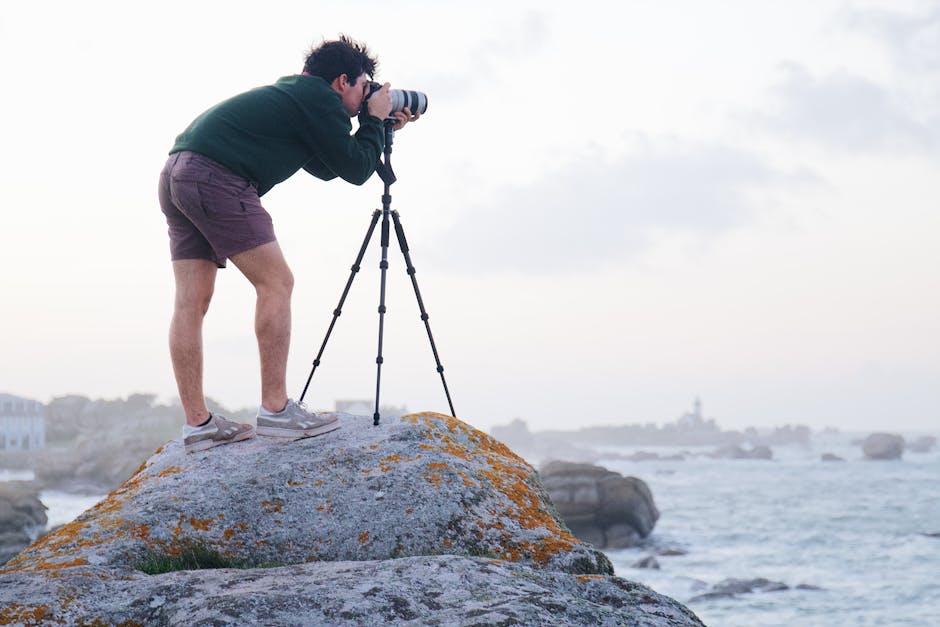
For sharp landscapes, stability beats features. If your head flexes, creeps, or twists while you lock it, sharpness drops.
Here’s my practical checklist I use in the field. I’m not guessing—I’ve tested enough setups to know what matters.
1) Match the head to your lens weight (and your tripod’s load rating)
Tripod makers list a load rating. Treat it as a ceiling, not a target. For landscapes, I aim for about 1/3 to 1/2 of that maximum so the head doesn’t flex.
Example: if your lens + body is 3.5 lb (1.6 kg) and your head says “11 lb max,” you’re fine. If you’re near the limit with a heavy telephoto and winter gloves, you’ll feel the head fight you.
2) Look for “no creep” locking
“Creep” is when the camera slowly shifts after you lock. On landscapes, it shows up as a tiny change in framing. On long exposures, it can add blur.
What to do: once you lock the head, gently tap the lens barrel and tripod. If the framing moves, you’ll likely see softness later. Some ball heads improve with a better tightening technique, but cheap heads often just don’t hold well.
3) Use a separate panning base or leveling system if you need accuracy
A good level (bubble or electronic) helps you keep horizons straight. For pan-tilt heads, independent pan/tilt lets you adjust horizon without loosening everything.
For landscapes, I also like a head that supports an easy way to add a long vertical adjustment. It helps when you shoot low angles with foreground rocks.
4) Plan for real wind and cold weather
Wind is the silent sharpness killer. A head with more mass (or better internal damping) tends to hold steady better.
Cold weather is another. Lubricants can thicken, and small knobs feel less precise with gloves. That’s why I prefer heads with clear lock points and easy knobs when temperatures drop below freezing.
Moving subjects checklist: smooth motion beats quick locking
For moving subjects, you need motion that feels natural. That means smooth pan/tilt control, or balanced tracking if you’re using a gimbal.
If your motion is jerky, you’ll miss the moment. If your camera drifts when you lock, you’ll waste time re-aiming.
1) Decide how you’ll track: slow follow or real-time panning
Are you tracking a running kid, cars on a road, or birds in flight? The answer changes the head you should buy.
- Slow follow (like a person walking): pan-tilt usually works well.
- Fast unpredictable movement (birds, bats): gimbal is the go-to when your lens is heavy enough.
- Mixed use (travel landscapes + occasional wildlife): a quality ball head can still work if your wildlife kit isn’t huge.
2) Smoothness test you can do in 5 minutes
At home, mount your camera and loosen the head slightly. Pan left to right and tilt up/down while watching how the camera “settles.”
Ideal feel: when you stop moving, it doesn’t bounce. It also doesn’t slide back slowly. If it does, you’ll notice it when you’re trying to frame action at the edge of the scene.
3) Use balance correctly if you choose a gimbal
Balancing a gimbal isn’t complicated, but it has rules. Start with your lens hood, tripod collar, and any accessories mounted like you normally shoot.
Then adjust until the camera stays level when you loosen the locks. If it tips down, it’ll lag during tracking. If it tips up, it’ll fight you and make smooth motion harder.
Ball head: best models by use case (what to look for in 2026)
Ball heads shine when you want speed and simple setup. In 2026, many photographers keep one ball head in their “general kit” because it works for landscapes and light wildlife.
Here’s how I pick a ball head that keeps sharpness in landscapes and doesn’t frustrate you during quick re-aims.
Ball head features I prioritize
- Lock type: Look for a strong lever lock that clearly tightens. Fine-tune knobs help too.
- Friction control: Good friction control lets you set how easily it moves before locking.
- Arca-style compatibility: Many photographers use Arca-Swiss plates for quick mounting. If your system is Arca-compatible, switching is easier.
- Height and angle: If you shoot low landscapes, check the head-to-camera clearance.
Ball head mistake most people make
They tighten the ball too hard every time. Over-tightening doesn’t always improve holding strength, and it can make micro-adjustments harder.
Instead, tighten firmly but not like you’re trying to break the knob. Then do a quick framing check by tapping the lens side to confirm there’s no creep.
Real scenario: coastal landscapes at dusk
Last winter I shot a rocky coastline at dusk. I was on a slippery surface, with salt spray in the air, and I needed to re-aim fast to keep the horizon consistent as the tide shifted.
A ball head helped because I could loosen, aim, lock, and move. I kept my shutter speed conservative (and used a timer) so wind wouldn’t mess with long exposures. The head didn’t creep because my lens weight was well under the head’s limit and I tightened smoothly, not aggressively.
Pan-tilt head: the “sharp landscapes + careful composition” choice
If you shoot landscapes where small angle changes matter, a pan-tilt tripod head is often the most forgiving option.
You’re less likely to knock your horizon out of place because pan and tilt are controlled separately. That alone is worth it for some people.
What pan-tilt heads are great at
- Level horizons: Fine control over tilt.
- Architectural work: Straight lines and precise framing.
- Controlled panoramas: Easier repeat steps for overlaps.
- Light wildlife panning: Slow tracking of animals that aren’t sprinting at you.
Pan-tilt head mistake I see a lot
People forget to tighten the pan lock enough. They think it’s locked because the camera doesn’t visibly move. But pan lock that’s just “close” lets the camera drift when you switch grip.
Do this: mount, compose, lock pan and tilt, then rotate your body around the tripod. If the framing changes, tighten more before you start the shot sequence.
Who pan-tilt is best for (honest answer)
Pan-tilt is best for you if you like deliberate shooting. If you shoot fast and react to weather changes, pan-tilt can feel slower.
But for sharp landscapes and repeatable angles, it’s a very solid trade.
Gimbal head: balance-first tracking for birds and sports
A gimbal head is the head type that makes long-lens tracking feel natural. It’s also the one that’s hardest to justify if your heaviest lens is under a couple pounds.
When it’s the right choice, it’s amazing. When it’s not, it’s just heavy and annoying.
How to know if you need a gimbal
Ask yourself these questions. If you say “yes” to two or more, you’re a strong gimbal candidate.
- Do you shoot birds in flight often (not just occasionally)?
- Do you use a long lens with a tripod collar and it’s heavy enough that you can feel it in your hands?
- Do you pan a lot during shoots and get tired of re-aiming?
- Do you want smooth tracking with less camera bounce?
Gimbal setup tips that actually matter
- Balance before locking: adjust roll and tilt locks so the camera stays where you want.
- Use the correct plate height: plates that shift can change balance.
- Set drag/controls for the speed you shoot: faster motion needs freer movement; slower needs more resistance.
- Mind cables: make sure straps and cables don’t snag during quick tracking.
When a gimbal is overkill
If you mostly shoot landscapes and only do a little wildlife, a gimbal adds bulk with little payoff. In those cases, a good pan-tilt or even a high-quality ball head can keep you efficient.
Also, if you shoot from a tripod for just a few minutes at a time, gimbal weight might not be worth it.
People also ask: tripod head questions photographers ask a lot
Which tripod head is best for landscapes?
For most landscapes, a ball head is best when you want speed, and a pan-tilt head is best when you want careful, precise angles. If you shoot architecture-like scenes, pan-tilt is especially strong for keeping horizons right.
Can I use a gimbal head for landscape photography?
Yes, but it’s usually unnecessary. A gimbal adds weight and changes your setup speed. If you already own one and you love wildlife, it can work for landscapes, just expect it to feel heavy on hiking days.
Do ball heads work for moving subjects?
They can, especially for lighter subjects or slower motion. For fast wildlife tracking with a heavy lens, a pan-tilt or gimbal will feel smoother and stay more stable.
Is a pan-tilt head better than a ball head?
Better is about your shooting style. Pan-tilt is more precise and easier to keep level. Ball heads are faster and more compact. If you care about sharp horizons, pan-tilt wins more often.
My recommended “one-kit” setups (so you don’t buy twice)
Most photographers don’t want three tripod heads. They want one system that covers their main jobs without feeling wrong.
Here are three realistic setups I’d recommend for different shooting mixes.
Setup A: One head for landscapes + travel
- Choose: a ball head with strong locking and good friction control.
- Why: fast aiming and compact carry.
- Best lens weight rule: stay clearly under the head’s max load for stability.
Setup B: One head for sharp landscapes + city architecture
- Choose: a pan-tilt head with smooth tilt control.
- Why: separate pan and tilt makes horizon adjustments easier.
- Extra tip: use a tripod level or built-in bubble so you’re not guessing.
Setup C: Two-head system for wildlife and everything else
- Choose: ball head for general use, gimbal for long-lens wildlife days.
- Why: you keep travel light most of the time.
- Original insight: I’ve found the biggest benefit isn’t the gimbal itself—it’s not having to “fight balance” on the wrong head when the moment happens.
How I test a tripod head before I trust it
This is the quick test I do when I get new gear or when I’m thinking about swapping heads for a trip. It takes under 10 minutes and saves hours later.
- Mount and tighten: set up camera, lock all knobs fully.
- Check for creep: after locking, gently tap the lens and watch if framing changes.
- Do micro re-aims: move a few degrees and lock again. If the head “jumps,” you’ll notice it in real shots.
- Shoot a test image: use a mid aperture like f/8, ISO 100, and a shutter speed long enough that vibration matters.
- Zoom in at 100%: check edges and text in the frame (if you can).
That last step is key. Many issues show up only when you zoom in.
Budget reality: what you should spend (and what you shouldn’t)
You don’t have to buy the most expensive head. But you also shouldn’t buy the cheapest one and expect it to hold a long lens perfectly.
In 2026, I’d spend more on lock quality and smooth control, and less on fancy features you’ll never use.
Here’s a simple way to think about it:
- Spend first on a head that holds still (no creep) and locks confidently.
- Spend next on controls you’ll touch constantly (pan/tilt locks, friction, quick release).
- Don’t overspend on “super precision” if you never shoot at critical angles.
Related posts you’ll likely care about
If you’re building a sharper setup overall, head choice is only one part. You’ll get better results when you pair it with good technique and secure workflow.
- Best tripods for landscape photography: stability tips that actually matter
- How to use a tripod for long exposure sharpness (wind, timer, and settings)
- Secure photo backups on the road: stop losing images after a shoot
Conclusion: choose the head that matches your movement, not your ego
Sharp landscapes and moving subjects ask for different camera motion. A ball head is usually the best match for fast landscape work. A pan-tilt head is ideal when you want careful angles and clean horizons. A gimbal head is the right tool when you’re tracking heavy, long-lens wildlife.
My takeaway is simple: pick the tripod head type based on how your subject moves (or how often you change your composition), then make sure the load and locking quality are right for your gear. If you do that, your sharpness improves fast—often before you even change a single camera setting.
Featured image alt text: How to choose tripod head for sharp landscapes and moving subjects—ball, pan-tilt, and gimbal comparison